



 Best Seller



1991–2000 Audi Cabriolet (8G) Service and Repair Manual PDF
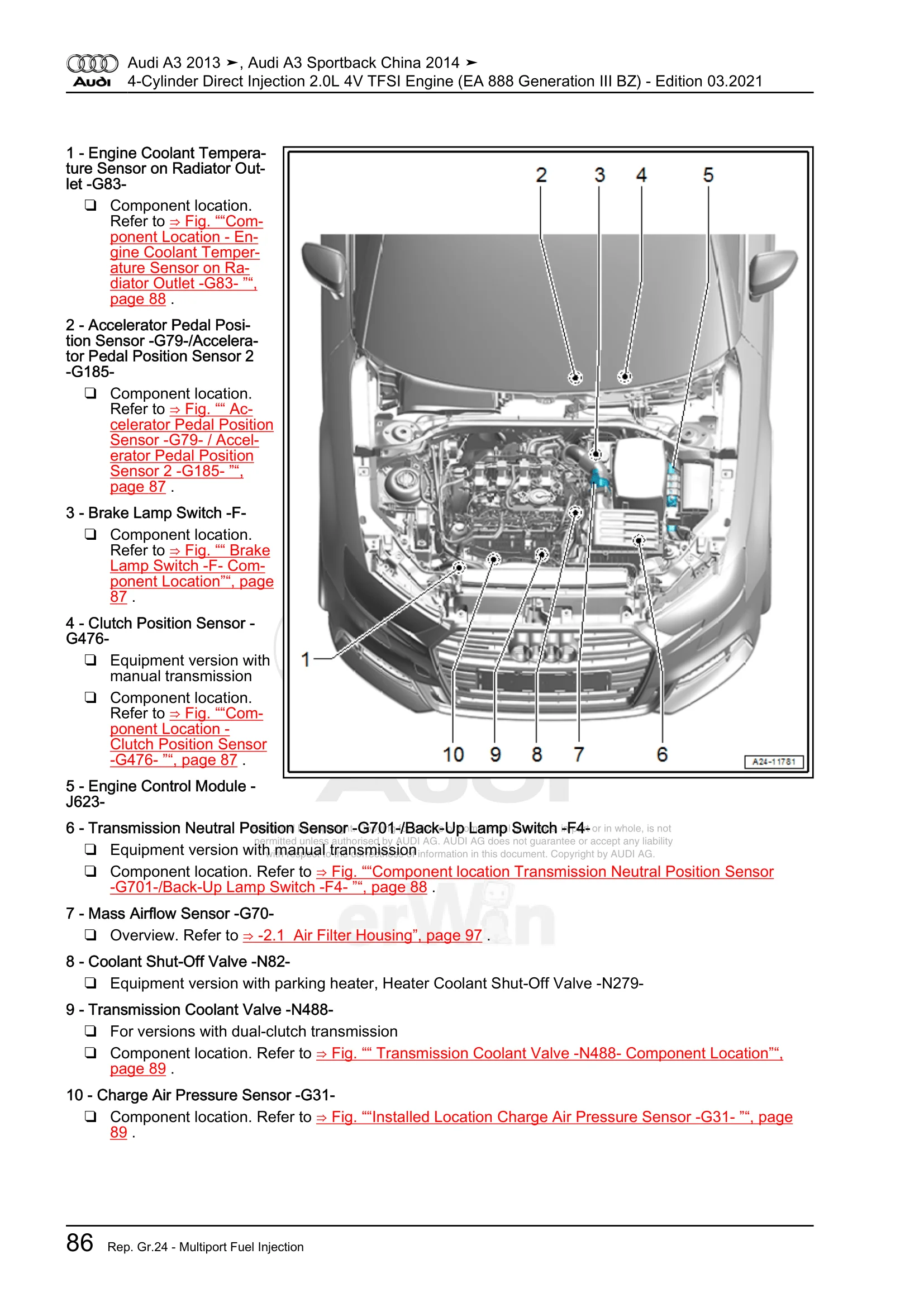
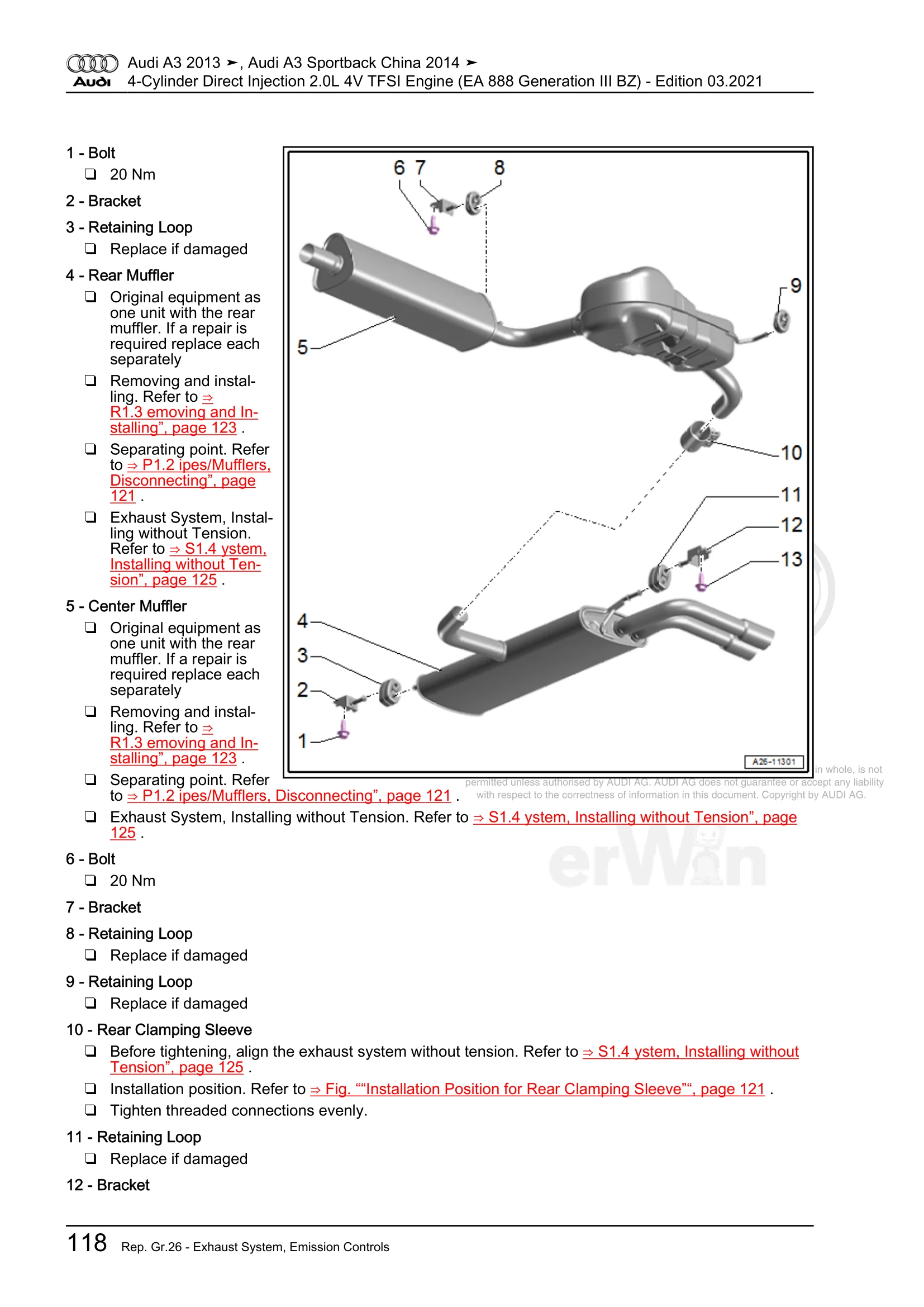
Workshop manual set for the classic Audi Cabriolet (Typ 8G, 1991–2000), including the 1997 facelift. Covers the electro-hydraulic soft top and its diagnosis, and — crucially — the fact that this car is a B3 Coupé underneath, not the Audi 80 it resembles, so you order the right parts. Front-wheel drive only. Download link sent within 24 hours of payment.
 You will get Download Link within 24 hours
 Secure Payment, Easy Download, 24/7 Support


Description
Audi Cabriolet (Typ 8G) Service and Repair Manual — 1991 to 2000
The Audi Cabriolet is one of the most misunderstood cars in the range — not because it is complicated, but because it does not fit the family tree the way people expect. It looks like an Audi 80, but underneath it is the older Coupé. It was sold alongside the A4 for years, but it is not an A4. And it stayed in production so long that a single “Cabriolet” can be almost a decade newer than another while sharing the same body.
Get the identity right and it is a straightforward, rewarding car to work on. Get it wrong — order Audi 80 B4 parts for it, for instance — and you will spend money on components that do not fit.
What the Audi Cabriolet actually is
Introduced in 1991 and built all the way to 2000, the Cabriolet (type code 8G) is based on the B3-generation Coupé, not the B4 Audi 80 it visually resembles. Because a convertible needs so much structural re-engineering, Audi kept it in production long after the rest of the B3 range had been replaced — which is why it was still being built years into the A4 era.
It received the styling updates of the B4 Audi 80 and, in 1997, a facelift with revised bumpers, projector headlamps and lights borrowed from the Porsche 911 (993). It was front-wheel drive throughout — quattro was never offered on this car, whatever a seller might tell you.
Knowing that it is a B3 Coupé underneath, wearing B4-era clothes, is the single most useful thing you can know before ordering a part for it. This documentation is built around that reality.
The soft top — the part that defines the car
The Cabriolet’s fabric roof was, from 1993, electro-hydraulically operated, and it is the system owners deal with most.
Coverage includes:
- Hydraulic pump, reservoir and cylinders — testing, fluid, and identifying which cylinder is leaking when the roof drops slowly
- The roof control relay and microswitches — the most common reason a healthy roof simply refuses to move
- Roof frame, tensioning and alignment
- Manual operation — how to get a stranded roof closed by hand when the hydraulics have failed
- The rear window and its fixings
- The drainage channels — which block with debris and let water into the cabin and the control electronics, exactly as on every convertible
Notably, this car dispenses with a fixed roll bar; the windscreen frame is reinforced instead. That changes the body structure around the A-pillars, and the repair data reflects it.
Engines covered
| Engine | Engine codes | Output | Notes |
|---|---|---|---|
| 2.0 8v petrol | ABK | 115 PS | Single-cam four |
| 2.0 16v petrol | ACE | 140 PS | Twin-cam, 1995–96 |
| 1.8 20v petrol | ADR | 125 PS | From 1997, from the A4 |
| 2.3 10v five-cylinder | NG | 133 PS | Early cars, to 1994 |
| 2.6 V6 | ABC | 150 PS | |
| 2.8 V6 | AAH | 174 PS | The range-topper |
The five-cylinder 2.3 in the early cars is a distinctive engine with its own quirks, and it is a world apart from the later four-cylinder 1.8 20v that arrived from the A4 in 1997. Treating a 1992 car and a 1999 car as “the same Cabriolet” mechanically is a mistake, and the documentation keeps the engine families separate.
Every engine is belt-driven and every one is an interference design — a snapped belt ends the engine.
Transmissions
Five-speed manual — clutch, flywheel, release bearing, linkage and fluid specification.
Four-speed automatic — fluid procedure, solenoid diagnosis, and the adaptation reset that resolves a surprising number of apparent gearbox faults.
The Cabriolet is front-wheel drive only. There is no quattro variant, no centre differential and no rear drive to service — a point worth being clear about, because it is frequently misdescribed for sale.
Electrical and diagnostics
Full wiring diagrams, connector views and pinouts, the central locking system, the soft-top control circuit, the instrument cluster, and fault code tables.
This is an early car, largely pre-OBD-II, diagnosing over blink codes or K-line depending on year. A modern OBD dongle will get you very little. The correct reading procedure for the year is covered.
Known Audi Cabriolet faults you will be looking up
- Soft-top hydraulics — roof stuck up, stuck down, or dropping slowly. Pump, cylinder leak, or a single dirty microswitch. The diagnostic order matters, and manual closure gets you home in the meantime.
- Water ingress and blocked roof drains — damp footwells and failing electrics. Clear the drains before replacing anything electrical.
- Timing belt on every engine — all interference designs. Interval, tensioner, water pump and locking positions.
- 2.6 and 2.8 V6 cam chain tensioners — a start-up rattle mistaken for the timing belt.
- Wrong parts ordered — the most expensive “fault” of all. This is a B3 Coupé underneath, not a B4 80. The documentation makes the platform identity explicit so you order the right components.
- Instrument cluster and gauge faults — the temperature and fuel senders, and cluster removal.
- Central locking pneumatic pump — running constantly or failing to lock. Leak testing rather than replacing on suspicion.
- Plastic-impeller water pump — disintegrates and overheats the engine. Replace with the belt.
- Distributor cap, rotor and HT leads on the older engines — misfire and hard starting.
- Wiring insulation degradation with age, particularly around the engine bay and the boot lid.
- Heater matrix and blower faults — a dashboard-out job on these cars, so worth diagnosing correctly first.
What’s inside this manual set
- Engine — removal, overhaul, timing, torque specifications
- Fuel and ignition systems
- Cooling and lubrication
- Transmission — manual, automatic and final drive
- Clutch and driveshafts
- Brakes, including ABS
- Suspension and steering, with alignment data
- Body — panel repair, body dimensions, trim removal
- Soft top — hydraulics, frame, alignment and manual operation
- Heating, ventilation and air conditioning
- Electrical — full wiring diagrams, connector views, pinouts
- Diagnostics — fault codes and reading procedures
- Maintenance schedules and service reset procedures
Format and delivery
Supplied as a set of searchable PDF files covering the Audi Cabriolet across its full 1991–2000 production run, including the 1997 facelift. Readable and printable on any device: laptop, tablet, phone, or the workshop PC. No software to install, and no internet connection needed once the files are saved.
Select your year at checkout. After payment, your download link is sent within 24 hours.
Frequently asked questions
Is this the same as an Audi 80 or an A4 Cabriolet?
No. This is the standalone Audi Cabriolet (Typ 8G), built 1991–2000 and based on the B3 Coupé. It looks like an 80 and was sold alongside the A4, but it is neither. The later A4 Cabriolet (from 2002) and A5 Cabriolet are different cars with their own manuals.
My roof has stopped halfway. Where do I start?
Not with the pump. On these cars the usual culprit is a microswitch or a leaking hydraulic cylinder, not the pump itself. The documentation gives the diagnostic sequence in the right order, and the manual closure procedure so you can get the roof shut in the meantime.
Does it cover the early five-cylinder 2.3?
Yes. The 2.3 10v NG five-cylinder in the early cars is covered, as are the later four-cylinder and V6 engines. They are documented separately because a 1992 Cabriolet and a 1999 Cabriolet share very little mechanically.
Is there a quattro version?
No. The Audi Cabriolet was front-wheel drive for its entire production run. If a car is being sold to you as a “quattro Cabriolet” of this era, something is wrong with the description.
Why does knowing it is a B3 Coupé matter?
Because it determines which parts fit. Order Audi 80 B4 components on the assumption that this is an 80, and a good number of them will be wrong. The documentation makes the platform explicit so you buy the right parts the first time.
Does it cover the 1997 facelift?
Yes. Both the earlier cars and the facelifted 1997-onward models — with the revised bumpers, projector headlamps and updated lighting — are covered.
Will this work with VCDS?
Partly, and only on later cars with K-line diagnostics and the right cable. Earlier cars are pre-OBD-II and use blink codes. Both routes are covered; a modern CAN-only adapter will not help you here.
Additional information
| Model year | 1991, 1992, 1993, 1994, 1995, 1996, 1997, 1998, 1999, 2000 |
|---|


Reviews
There are no reviews yet.