



 Best Seller
1980–1991 Audi Quattro Service and Repair Manual PDF
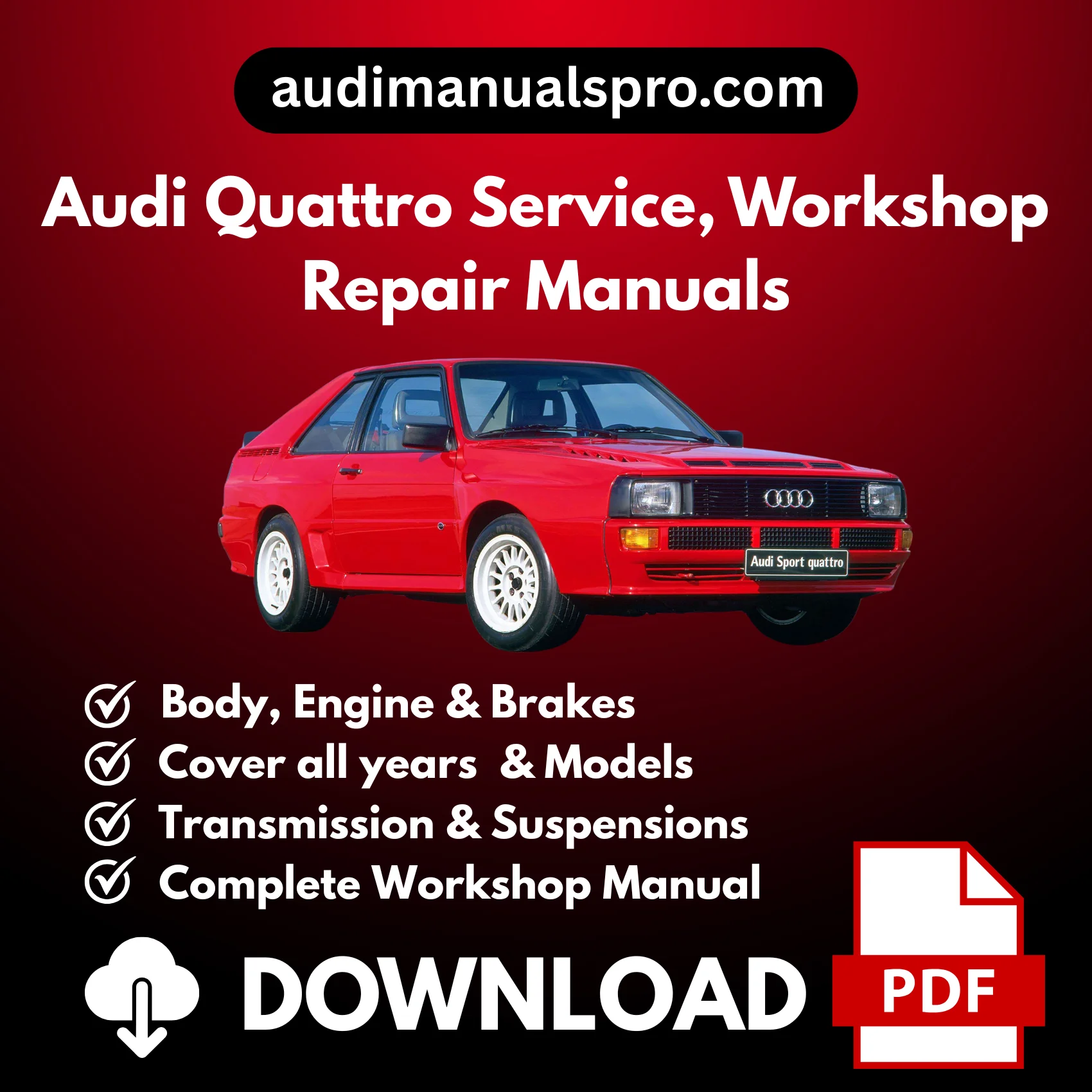
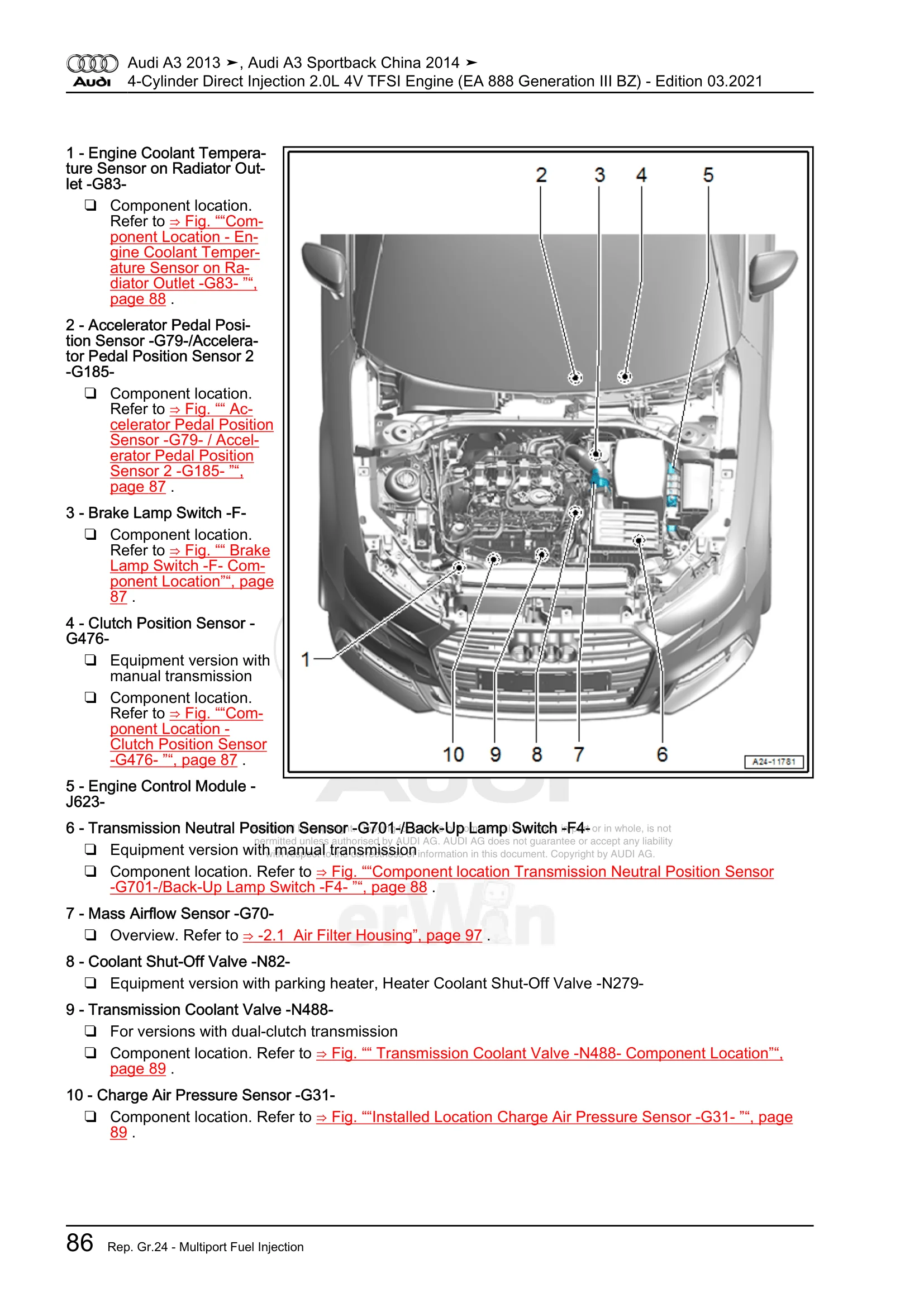
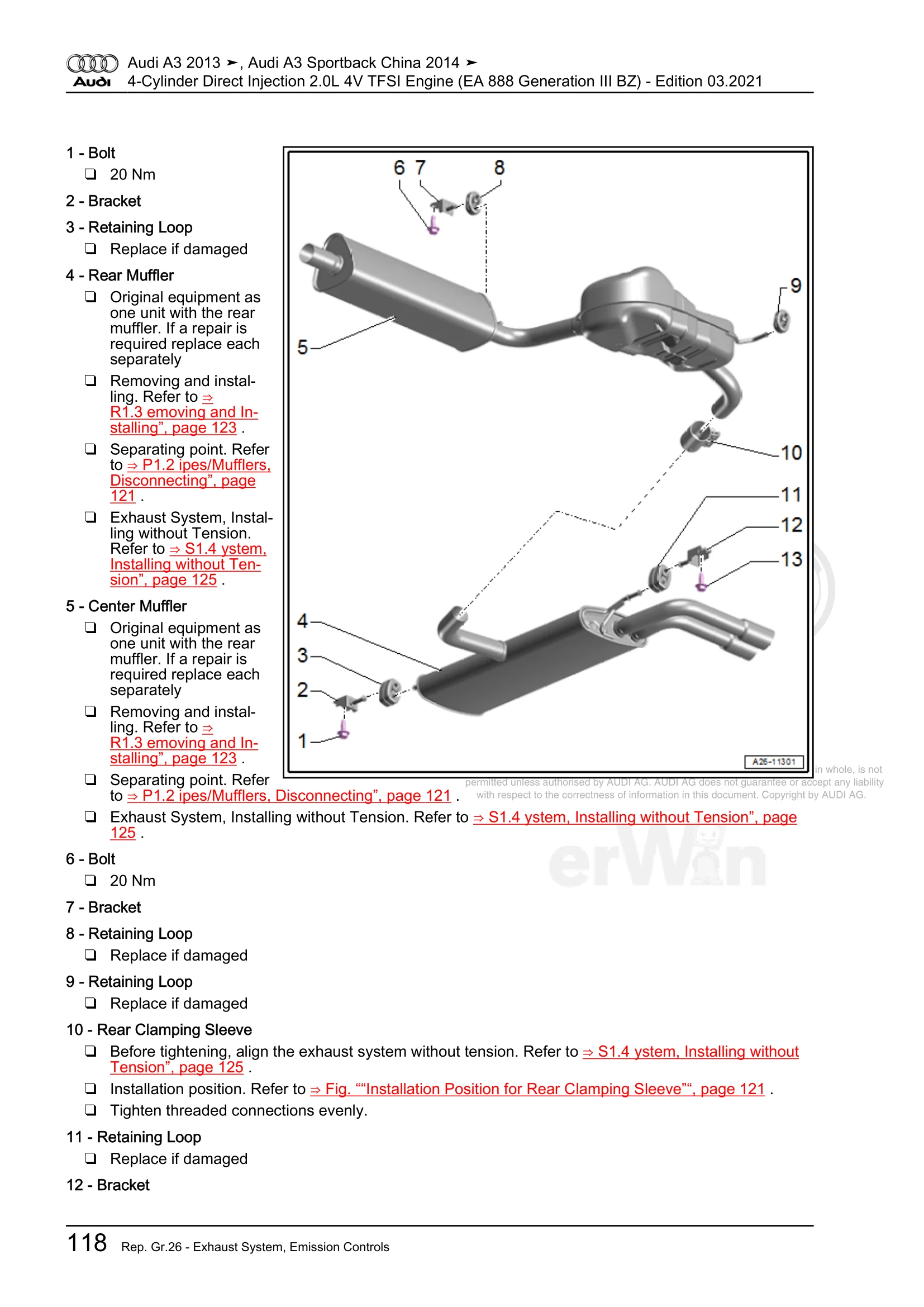
Workshop manual set for the original Audi Quattro (Ur-Quattro, Typ 85, 1980–1991), with the 10-valve, MB and 20-valve cars documented distinctly. Covers the turbocharged five-cylinder engine, the Bosch K-Jetronic injection, the driver-operated differential locks, and the digital dashboard — the systems no modern technician has ever seen. Download link sent within 24 hours of payment.
 You will get Download Link within 24 hours
 Secure Payment, Easy Download, 24/7 Support


Description
Audi Quattro (Ur-Quattro, Typ 85) Service and Repair Manual — 1980 to 1991
This is the car that changed motorsport and rebuilt Audi’s entire identity — the original Quattro, the one enthusiasts call the Ur-Quattro to separate it from every “quattro” badge that came after. If you own one, you are not maintaining transport. You are keeping a piece of history running, usually with parts that are increasingly hard to find and procedures that no modern technician has ever seen.
That is exactly why period-correct documentation matters here more than on any other Audi. Nobody under fifty learned these systems in training. The knowledge lives in manuals like this one and in the heads of a shrinking number of specialists.
What the Ur-Quattro is
Produced from 1980 to 1991 on the Typ 85 platform, the Quattro was the first car to bring permanent four-wheel drive to a high-performance road car, built to homologate Audi’s world-conquering Group B rally programme. It is front-engined, turbocharged, and defined by its five-cylinder engine and its mechanical all-wheel-drive system.
Over eleven years it evolved through three broad phases, and knowing which one you have governs almost everything:
- Early cars (1980–1987) — the 10-valve turbocharged inline-five (WR engine), with mechanical, driver-operated differential locks and the famous digital dashboard on later examples.
- MB engine (1988–1989) — a revised 10-valve with a Torsen centre differential replacing the manual centre lock.
- 20-valve (1989–1991, RR engine) — the final and most sophisticated cars, with a 20-valve twin-cam head and 220 PS.
These are three quite different cars wearing one silhouette, and this documentation keeps them apart.
The five-cylinder turbo engine
The inline-five is the heart of the Quattro and the source of its unmistakable off-beat exhaust note. It is also nothing like a modern engine to work on.
- 10-valve (WR, MB) — the SOHC turbo five. Timing belt, the KKK turbocharger, and the fuelling system that runs it.
- 20-valve (RR) — the DOHC four-valve-per-cylinder head, a genuinely more complex engine with different timing, different cooling and different tuning.
- Bosch fuel injection — these cars run mechanical and early electronic-mechanical injection systems. K-Jetronic and KE-Jetronic on the earlier cars, with the warm-up regulator, fuel distributor and control pressure that behave unlike anything with modern sensors. System pressure testing and mixture setup are documented in full.
- Boost control — the wastegate, the boost pressure system and, on the digital-dash cars, the electronic control. Overboost, underboost and the safety cut are all covered.
The quattro drivetrain — the reason the car exists
The original Quattro’s all-wheel drive is mechanical and, on early cars, driver-controlled. There is no computer deciding anything.
- Manual differential locks (early cars) — the centre and rear differentials are locked by the driver, originally by a pull-cable and later by a pneumatic/vacuum system. Operation, adjustment and the common failures of the locking mechanism are covered.
- Torsen centre differential (MB onward) — the self-locking torque-sensing differential that replaced the manual centre lock. Operation and inspection.
- The hollow-shaft layout — the ingenious concentric-shaft design that made the whole system fit. Understanding it is essential before any gearbox or transfer work.
- Front and rear final drives, driveshafts and CV joints.
Electrical and the digital dashboard
Full wiring diagrams for each phase, connector views and pinouts, and — critically for the later cars — the digital instrument cluster with its distinctive green display and voice synthesiser warnings. That cluster is a known trouble spot, and its faults, connections and repair route are documented.
These are pre-OBD cars. Diagnosis is done with a multimeter, the wiring diagram and a real understanding of the systems — not a scan tool. The documentation is written for that world.
Known Ur-Quattro issues you will be looking up
- Wrong phase, wrong parts — the most expensive mistake on these cars. 10v WR, 10v MB and 20v RR share far less than their looks suggest. The documentation makes the identification explicit.
- K-Jetronic / KE-Jetronic running faults — poor cold starting, uneven idle, hesitation. Almost always control pressure, the warm-up regulator or mixture, and testable rather than guessable.
- Differential lock mechanism failure — cables seizing on early cars, or the pneumatic/vacuum actuation failing on later ones. Adjustment and repair.
- Digital dashboard faults — dead segments, failed display, or erratic readings. A signature Ur-Quattro problem.
- Timing belt on every engine — interference designs. Interval, tensioner and the correct procedure for the 10v and 20v, which differ.
- Turbocharger and wastegate — boost problems, oil feed and the KKK unit.
- Hydraulic system (brakes and steering) — the Pentosin-based central hydraulic system on many cars, which takes the correct mineral fluid and nothing else.
- Rust in the structural areas — these cars are old and not fully galvanised early on. The inspection points that matter for a car of this value.
- Wiring loom degradation — decades-old insulation cracking and shorting.
- Bulkhead and heater components — labour-heavy areas worth diagnosing correctly before starting.
What’s inside this manual set
- Engine — the five-cylinder turbo, 10-valve and 20-valve, removal, overhaul, timing, torque
- Fuel and ignition — K-Jetronic and KE-Jetronic mechanical injection, boost control
- Turbocharger and wastegate
- Cooling and lubrication
- Transmission, transfer and the quattro drivetrain — manual locks and Torsen
- Clutch, driveshafts and final drives
- Brakes and the central hydraulic system
- Suspension and steering, with alignment data
- Body — panel repair, body dimensions, rust inspection points, trim
- Electrical — full wiring diagrams by phase, the digital dashboard
- Diagnostics and fault-finding for pre-OBD systems
- Maintenance schedules and service procedures
Format and delivery
Supplied as a set of searchable PDF files covering the Ur-Quattro across its full 1980–1991 run, with the 10-valve, MB and 20-valve cars documented distinctly. Readable and printable on any device: laptop, tablet, phone, or the workshop PC. No software to install, and no internet connection needed once the files are saved — which matters when you are working on a car this old in a corner of the garage.
Select your year at checkout. After payment, your download link is sent within 24 hours.
Frequently asked questions
Which Quattro do I have?
Early cars (1980–1987) have the 10-valve WR engine and driver-operated differential locks. The 1988–1989 MB cars have a revised 10-valve and a Torsen centre differential. The 1989–1991 cars have the 20-valve RR engine. The documentation is organised by phase, so once you know your engine and year you always know which section applies.
Does it cover the mechanical fuel injection?
Yes, in detail — K-Jetronic and KE-Jetronic, including control pressure, the warm-up regulator, the fuel distributor and mixture setup. If you have never worked on CIS injection, this is the section you will use most, because none of it works like a modern engine.
Are the manual differential locks covered?
Yes. The driver-operated centre and rear locks on the early cars — cable and later pneumatic/vacuum — are documented, including adjustment and the common failures. The later Torsen centre differential is covered separately.
My digital dashboard has failed. Is that in here?
Yes. The green digital cluster is a known Ur-Quattro weak point, and its faults, connections and repair route are documented.
Is the 20-valve engine covered as well as the 10-valve?
Yes, and they are kept separate. The 20v RR is a genuinely different, more complex engine with its own timing, cooling and tuning — treating it as a 10-valve with more valves is a mistake.
Can I use a modern OBD scanner?
No. These are pre-OBD cars. Diagnosis is done with a multimeter and the wiring diagrams, and the documentation is written for exactly that approach.
Are parts still available?
Many are, through specialists, but you must order for the correct phase — the three versions share less than they appear to. The documentation makes the identification explicit, which is where a lot of money gets saved on a car this valuable.
Additional information
| Model year | 1980, 1981, 1982, 1983, 1984, 1985, 1986, 1987, 1988, 1989, 1990, 1991 |
|---|


Reviews
There are no reviews yet.